Building Bright Futures: Why Block Play is the Smartest Choice for Young Minds
Every parent wants to give their child the best possible start in life. In a world full of glowing screens and digital distractions, the most powerful learning tool for young minds remains beautifully simple: building blocks.
Whether it is wooden alphabet blocks, magnetic tiles, or classic foam bricks, block play is much more than a quiet pastime it is a cornerstone of early childhood development. From boosting spatial awareness to encouraging early STEM concepts and emotional resilience, manipulative play shapes young brains in ways modern technology simply cannot replicate.
When looking for the perfect hands-on learning toy, high quality options like the Skoolzy Educational Building Blocks offer an exceptional way to combine fun with skill building, giving toddlers the exact tools they need to explore and construct freely.
Why Block Play is Essential for Early Childhood Development
According to leading experts in Early Childhood Education (ECE), open-ended play is vital during a toddler’s foundational years. Unlike toys with predefined rules, blocks offer complete freedom allowing children to explore, take apart, and rebuild whatever their imagination constructs.
When children engage in block-based creation, they step into the shoes of young scientists and artists simultaneously. They learn how the physical world operates through hands-on experience rather than instruction manuals.
10 Core Skills Children Learn from Block Play
1. Problem Solving and Critical Thinking
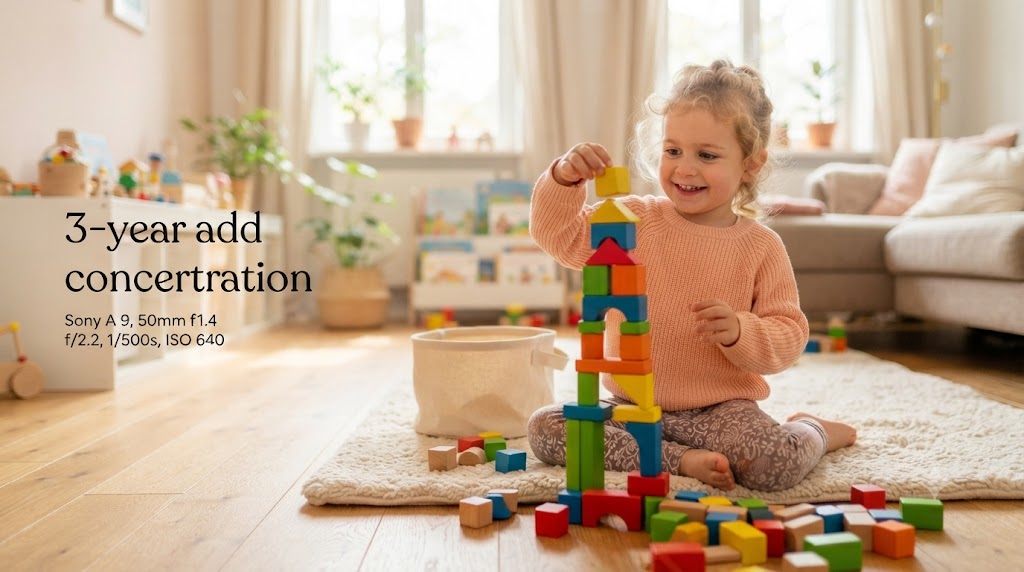
Building a tower that stays upright requires trial and error. Children naturally analyze why a structure collapses, experiment with balance and weight, and discover practical solutions on their own.
2. Spatial Awareness and Spatial Cognition
Understanding shapes, sizes, and how objects fit together in 3D space is core to spatial cognition. Early exposure to spatial relationships lays a strong foundation for future success in geometry and physical sciences.
3. Fine Motor Skills and Hand-Eye Coordination
Reaching for, lifting, stacking, and carefully aligning blocks strengthens small muscles in hands and fingers. This dexterity directly prepares young children for handwriting, drawing, and using everyday tools.
4. Early Math and STEM Concepts
Block play introduces fundamental math skills in a natural, hands on environment:
- Counting & Sorting: Grouping blocks by color, shape, or size.
- Geometry & Patterns: Recognizing symmetry, balance, and structural order.
- Basic Physics: Experiencing gravity, balance, and cause-and-effect firsthand.
5. Creativity and Unbounded Imagination
A set of loose parts can transform into a castle, a roaring dinosaur, or a busy city grid. This creative freedom fosters independent thinking and problem-solving without limitations.
6. Language and Communication Skills
When children describe what they are building, ask for specific pieces, or narrate a story around their creations, their vocabulary expands dramatically. Block play provides rich context for meaningful discussions between peers and adults.
7. Personal, Social, and Emotional Development (PSED)
Building together requires negotiation, sharing materials, taking turns, and co-constructing ideas. It creates a collaborative environment where young children forge friendships and learn social cooperation.
8. Persistence, Resilience, and Growth Mindset
Not every structure stands tall on the first attempt. When a block tower tumbles down, children learn to handle minor frustration, rebuild with adjustments, and cultivate a resilient “try again” attitude.
9. Planning and Organization
Before laying down the first brick, a child visualizes the end goal. Deciding where to start and sequencing steps logically builds executive function and organizational thinking.
10. Self-Confidence and Achievement
Completing a unique block structure gives toddlers a tangible sense of accomplishment. This proud moment boosts self-esteem and inspires them to take on greater learning challenges.
How Parents Can Support Block Play (Adult Scaffolding)
While independent free-play is crucial, adult interaction can elevate a child’s learning experience without taking away their autonomy.
- Ask Open-Ended Questions: Instead of giving directions, ask “I wonder what happens if we put a larger block on top?” or “How can we make the base stronger?”
- Provide Diverse Materials: Offer a variety of textures—such as wooden blocks, foam sets, and sensory or magnetic blocks—to keep exploration fresh.
- Create Dedicated Play Spaces: Ensure toddlers have a flat, safe surface where their creations can remain undisturbed for deeper play sessions.
Frequently Asked Questions (FAQs)
Q1: At what age should children start playing with blocks?
Children can begin as early as 6 months with soft cloth or foam blocks. As their fine motor skills advance around ages 2 to 3, they transition to wooden blocks, magnetic sets, and interlocking bricks.
Q2: Are blocks only for solo play?
Not at all! Block play is a fantastic group activity that promotes teamwork, language development, and social cooperation among siblings and classmates.
Q3: What types of building blocks are best for toddlers?
A well rounded collection includes classic wooden blocks for balance, sensory Montessori toys for tactile feedback, and magnetic sets for exploring structural engineering concepts.
Final Thoughts
Block play is far more than a simple childhood activity it is a comprehensive, proven pathway to building critical cognitive, physical, and emotional skills. By encouraging open-ended play today, you give your child the foundational tools they need to become tomorrow’s confident problem-solvers and creative thinkers.